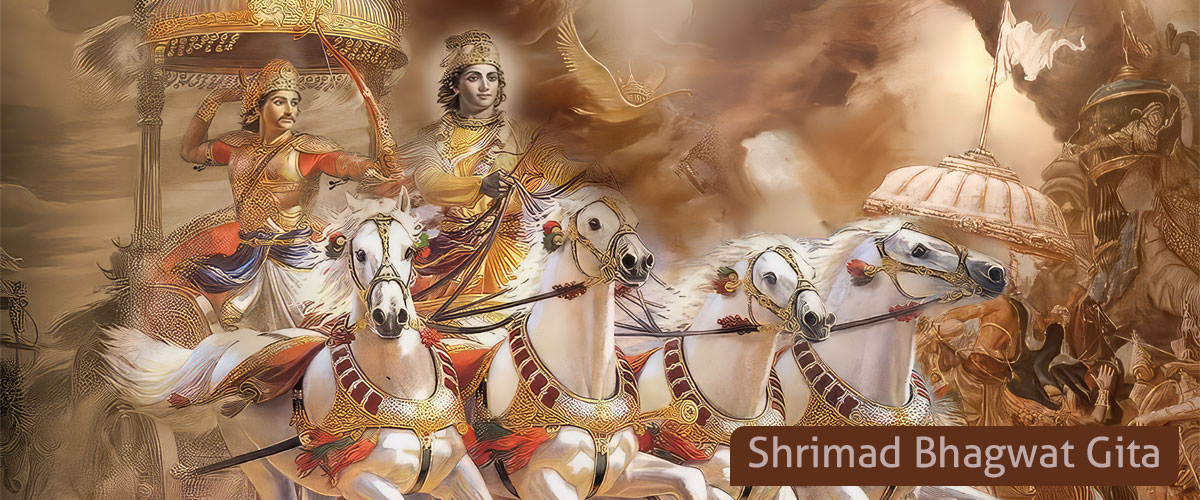
The theme of the second half of this chapter, and the theme of the next chapter, is predominantly ‘Karma Yoga’.
Karma, in simple terms simply refers to the actions we perform. The question here is - what should be our approach and attitude (or mindset) towards the work we do?
So far, the Lord has explained: (see here):
Ātman is the true essence of our existence.
This ātman is indestructible, whereas the body in which it resides keeps changing.
Therefore, it is futile to identify with the body, which is only temporary. Rise above the emotions and attachments derived from the body, and stand up for dharma
The Purpose of the Body?
The Lord offers another perspective on why Arjuna should not abandon the battlefield - based on Arjuna’s sva-dharma.
Arjuna is a kshatriya - one belonging to the class responsible for administration and protection of society. The battlefield was set for upholding dharma and quelling adharma. For a kshatriya, there is no honour higher than sacrificing oneself for such a noble purpose.
The Lord also makes another significant point: Arjuna was a celebrated warrior, and the Pāndavās were known for their sincere commitment to dharma. In that context, Arjuna’s withdrawal from battle would be viewed as cowardice. With position and stature come equal responsibilities. It is essential to stay true to one’s role.
Thus, the body must be used as a means to perform actions (karma) aligned with one's dharma. IIn this case, Arjuna’s sva-dharma is to protect - so the body should serve that very purpose. Whether it brings pleasure or pain, victory or defeat -none of these should matter. What matters is dedication to the purpose of action.
Introduction to Buddhi Yoga
This leads to what the Lord calls ‘Buddhi Yoga’ -the attitude or mindset one must maintain while performing actions. This serves as the foundation for the next chapter, Karma Yoga. The buddhi (intellect) must be completely devoted to the purpose of the action. Without this attitude, one is easily distracted and strays from the goal.
In this context comes one of the most celebrated verses of the Bhagavad Gita:
कर्मण्येवाधिकारस्ते मा फलेषु कदाचन |
मा कर्मफलहेतुर्भूर्मा ते सङ्गोऽस्त्वकर्मणि || 2.47 ||
“Your right is only to perform your duty, not to the fruits of action. Never think yourself the cause of the results, and never be attached to inaction.”In one verse, the Lord offers a simple technique to eliminate stress and anxiety - disassociate yourself from the results, and focus on the action itself.The Lord further emphasizes: do not consider yourself the sole cause of the result. While you are part of the action, the outcome depends on many other factors as well.
Think about it - our very existence is a divine blessing. Our behaviour, skills, and education are all shaped by the environment we were raised in - not solely by our choices. Did you choose your family, your teachers, or the friends who influenced your life? These are divine blessings that shaped who you are. So, can we truly take pride in doing it all ourselves?
The results of our actions are the culmination of many factors - circumstances, past actions, and the influence of others -not all of which are visible or within our control.
Simply put, remove the burden of the result from your shoulders — surrender it to the Lord, and perform your duties sincerely. This is a simple recipe for a contented life.
Performing your duties while accepting both success and failure with equanimity — that is Buddhi Yoga. Developing such an attitude in all actions is the greatest skill we can cultivate. Yet, it is so rare and so difficult to practice — isn’t it?
Traits of Sthita-prajña
Arjuna, curious about this state, asks the Lord: What are the traits of a person with such steady wisdom — a sthita-prajña? How does such a person respond to situations and interact with the world?
A sthita-prajña is never driven by desires of the senses or the mind. Their desires are not for self-gratification. They remain content and blissful with what they have, independent of anything external. They have complete control over their mind and senses and are never distracted by the allure of the external world.
Desires vs Purpose
Are they devoid of desires? Not necessarily. The distinction lies between desire and purpose.
For example, the desire to eat is natural — its purpose is to live. But the desire to eat a crispy masala dosa satisfies the tongue, not the need for nourishment. The focus shifts from living to tasting. If you don’t get a masala dosa but receive a ghee dosa instead, you might feel disappointed — that craving lingers until next time. Such desires, driven by sensory pleasure, are endless.
Apply this principle to any sense - you’ll see how the mind behaves.
Similarly, every action has a primary purpose, but countless subtle desires can distract us and reduce our efficiency.
Consider another example:
Purpose - to be kind to all.
Desire of the mind - to be seen as a kind person.
If you act from purpose, your thoughts and actions align with kindness. But if you act from desire — to be recognised — you’ll feel disturbed when someone doesn’t acknowledge your kindness. You may even stop being kind to them! Thus, you fail the very purpose you began with.
The Lord warns that this control is not easy to achieve. Even if you forcefully give up something, the memory of its pleasure lingers and can easily throw you off balance. The only remedy is to seek something more fulfilling — something eternal. Experiencing that eternal truth alone brings lasting peace.
A person free from desires, having renounced ego, is ever-content and ever-peaceful — that is a sthita-prajña.
DISCLAIMER:
This is our sincere attempt to summarise the Gitopadeśa through a series of short blogs. It is not a full translation or commentary on the divine scripture. We seek forgiveness from the reader and the Lord for any omissions, which are inevitable to maintain brevity.
The content includes both the writer’s reflections and summarised interpretations of several shlokas from the Bhagavad Gita. The intent is not to commentate but to inspire readers to explore the Bhagavad Gita in its entirety.
The writer is neither a scholar nor a recluse — just a seeker who believes that the Lord is the doer behind all actions. Being human, he may err; please forgive him for such mistakes.
